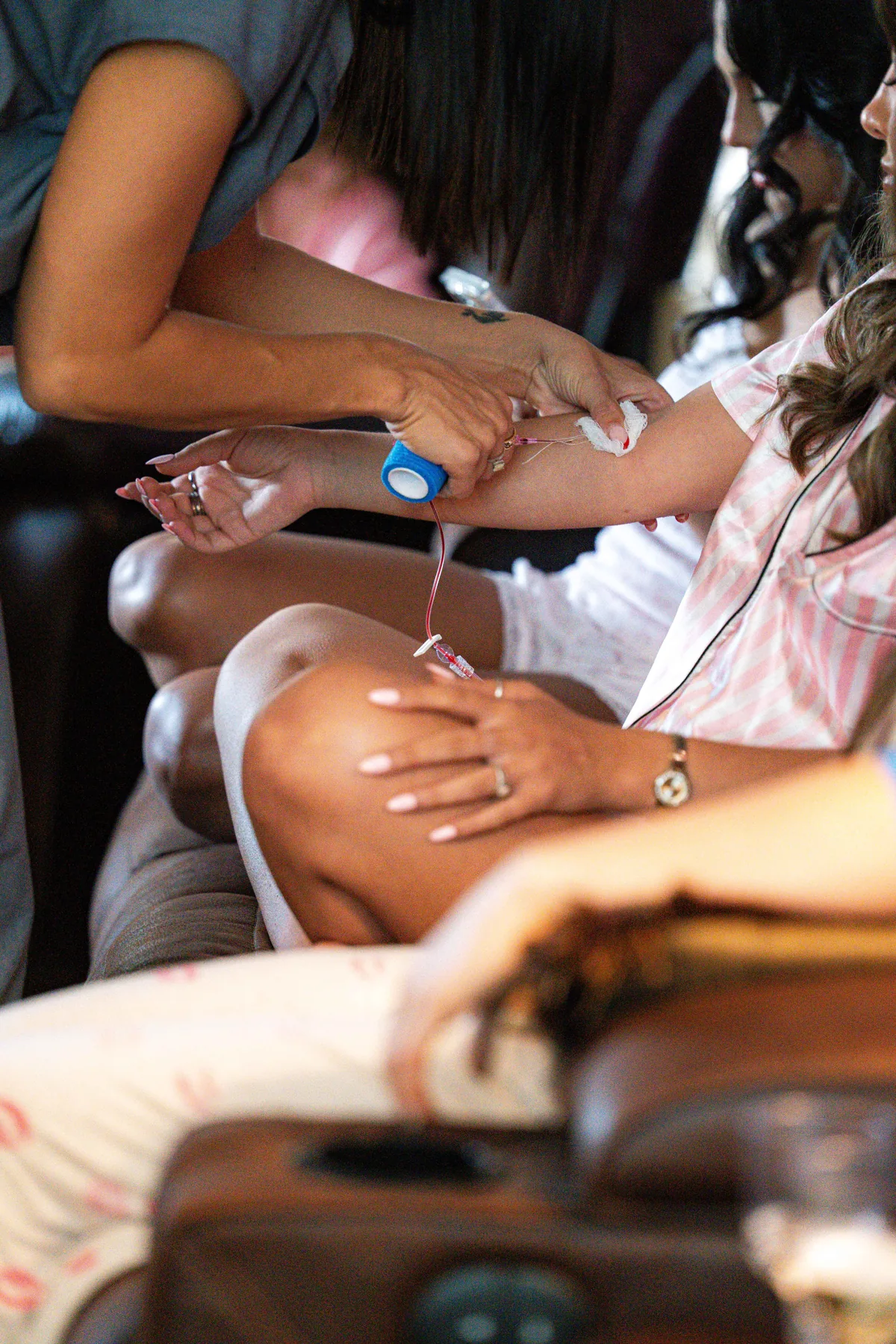
Nashville has become one of the most active fitness cities in the South. From marathon training crews logging miles along the Shelby Bottoms Greenway to packed CrossFit boxes in East Nashville, F45 studios in The Gulch, and hot yoga classes in Midtown, the city's athletes push their bodies hard. Add in the heat and humidity that defines a Tennessee summer, and the demands on hydration, electrolytes, and nutrient stores intensify well beyond what most athletes realize.
Training for the Nashville Marathon, grinding through a competitive CrossFit season, or maintaining peak performance across a demanding weekly schedule, what you do after your workout matters as much as what you do during it. Recovery is where adaptation happens, and the speed of that recovery determines how quickly you can train at full intensity again.
That is why athletes across Nashville and beyond are turning to IV therapy as a core component of their recovery protocol.
Why Athletes Are Turning to IV Therapy
The appeal of IV therapy for athletes comes down to one concept: bioavailability. When you take a vitamin orally, whether it is a capsule, a powder mixed into water, or a chewable tablet, that substance has to survive your stomach acid, pass through the intestinal lining, and undergo first-pass metabolism in the liver before any of it reaches your bloodstream. This process delivers only 20 to 50 percent of what you consumed, depending on the nutrient and the state of your digestive system.
IV therapy eliminates every one of those barriers. When nutrients, electrolytes, and amino acids are delivered directly into the bloodstream through an intravenous line, your body receives 100 percent of the dose. Nothing is lost to digestion. Nothing is filtered prematurely by the liver. Every milligram reaches the cells that need it.
For athletes who are already doing everything right with nutrition, training, and sleep, IV therapy represents the final optimization layer. It is the difference between getting half of what your supplements promise and getting all of it, exactly when your body needs it most.
The Science of Exercise-Induced Depletion
Intense exercise creates a predictable cascade of physiological stress that depletes your body's resources at a rate that oral intake simply cannot match in real time.
Fluid Loss
During intense training, athletes lose between 1 and 2 liters of sweat per hour depending on intensity, temperature, and individual physiology. In Nashville's summer heat, that number can climb even higher. This is not just water loss. Sweat carries sodium, potassium, magnesium, and chloride with it. Losing even 2 percent of your body weight in fluid impairs endurance performance, increases heart rate, reduces blood volume, and accelerates fatigue. At 3 to 4 percent dehydration, cognitive function deteriorates and the risk of heat illness rises significantly.
Electrolyte Depletion
Sodium losses during a two-hour training session can exceed 2,000 milligrams. Potassium, magnesium, and calcium are also depleted through sweat. These minerals are not optional for athletic performance. They regulate muscle contraction, nerve signaling, heart rhythm, and cellular hydration. When they run low, you get cramps, weakness, dizziness, and the type of deep fatigue that no amount of rest seems to fix.
B Vitamin Depletion
The B vitamin complex is central to energy metabolism. B1 (thiamine) supports carbohydrate metabolism. B6 is critical for amino acid metabolism and red blood cell production. B12 drives neurological function and DNA synthesis. During prolonged exercise, your body burns through these vitamins at an accelerated rate. Athletes with depleted B vitamin stores experience reduced endurance, slower recovery, and persistent fatigue that mimics overtraining.
Oxidative Stress
Intense exercise generates a surge of free radicals as a byproduct of increased oxygen consumption. While moderate oxidative stress is a normal part of the adaptation process, excessive free radical production causes cellular damage, inflammation, and delayed recovery. Your body relies on antioxidants like Vitamin C and Glutathione to neutralize these free radicals, but heavy training depletes these protective compounds faster than diet alone can restore them.
IV Therapy vs Sports Drinks and Supplements
Athletes have no shortage of recovery products marketed to them. Sports drinks, electrolyte powders, BCAA supplements, protein shakes, and recovery gummies fill the shelves of every supplement store. These products have their place, but they all share the same fundamental limitation: oral absorption.
A typical sports drink delivers electrolytes and simple sugars, but your stomach can only absorb about 1 liter of fluid per hour under ideal conditions. After intense exercise, when blood flow has been diverted away from the GI tract to working muscles, absorption rates drop further. This means that even if you are drinking aggressively after a workout, your body is playing catch-up for hours.
Oral supplements face even steeper absorption challenges. A standard oral magnesium supplement has a bioavailability of roughly 30 to 40 percent. Oral Vitamin C tops out around 50 percent absorption at moderate doses and drops further as dosage increases. Oral glutathione is almost entirely destroyed by stomach acid before it reaches the bloodstream.
IV therapy sidesteps all of these limitations. A single IV treatment delivers a full liter of electrolyte-balanced fluids plus therapeutic doses of vitamins, minerals, and amino acids at 100 percent bioavailability. What would take hours of eating, drinking, and supplementing to partially achieve, IV therapy accomplishes in 30 to 45 minutes. For a deeper look at how these absorption rates compare across specific nutrients, read our full breakdown in IV Therapy vs. Oral Supplements.
The Competitive Edge: Built for Athletes
The Drip Lab's athletic recovery treatment is The Competitive Edge, priced at $300. This drip was formulated specifically for athletes who demand faster recovery, reduced inflammation, and optimized performance. Here is exactly what is in the bag:
- IV Electrolytes: a full liter of medical grade saline to restore fluid volume and rehydrate at the cellular level
- Vitamin B12: supports energy production, red blood cell formation, and neurological function critical for athletic performance
- B Complex: a full spectrum of B vitamins (B1, B2, B3, B5, B6) that drive energy metabolism and reduce exercise-induced fatigue
- Vitamin C: a powerful antioxidant that neutralizes exercise-generated free radicals and supports immune function during heavy training
- Glutathione: your body's master antioxidant, essential for reducing oxidative stress, supporting liver function, and accelerating cellular recovery
- Magnesium: the mineral most rapidly depleted by intense exercise, critical for muscle relaxation, cramp prevention, sleep quality, and over 300 enzymatic reactions
- Zinc: supports immune defense, protein synthesis, and tissue repair, all processes that accelerate during recovery from intense training
- Amino Acids (GAC Blend): a targeted blend of Glutamine, Arginine, and Carnitine that supports muscle repair, blood flow, and fat metabolism for athletes pushing their physical limits
Every ingredient is pharmaceutical grade and administered by a licensed registered nurse under physician oversight. The full infusion takes approximately 30 to 45 minutes and can be delivered to your home, gym, or wherever recovery happens.
Nashville's Athletic Culture and IV Therapy
Nashville is a city that takes fitness seriously. The running community alone is massive, with thousands of athletes training year-round for the Nashville Marathon, the Music City Half Marathon, and dozens of local races. CrossFit boxes in East Nashville and Germantown draw competitive athletes who train at high intensity five to six days a week. F45 studios across Midtown, The Gulch, and Green Hills pack classes from 5 AM to 7 PM. Hot yoga studios push athletes through 90-minute sessions in rooms heated to 105 degrees.
Then there is the professional sports culture. The Nashville Predators and Nashville Titans bring a year-round awareness of elite athletic performance to the city. The culture of competitive fitness runs deep here, and with it comes a growing demand for recovery solutions that match the intensity of the training.
Nashville also presents a unique environmental challenge. Summer temperatures regularly exceed 95 degrees with humidity above 60 percent. Training in these conditions amplifies fluid loss, accelerates electrolyte depletion, and increases the risk of heat-related performance decline. Athletes who train outdoors in Nashville during the summer months are losing significantly more through sweat than their counterparts in cooler, drier climates.
This combination of intense training culture and demanding climate is exactly why IV therapy has become a staple for Nashville athletes who want to train harder, recover faster, and perform at their best.
Pre-Event vs Post-Event: When to Schedule
One of the most common questions from athletes is whether to schedule IV therapy before or after competition. The answer depends on your goals, and many competitive athletes use both strategies at different points in their training cycle.
Pre-Event IV Therapy
Scheduling an IV drip 24 to 48 hours before a race, game, or competition ensures that you start fully hydrated with optimal nutrient stores. This is particularly valuable before endurance events like the Nashville Marathon, where starting the race even slightly dehydrated can cost minutes on your finish time. Pre-event IV therapy fills your tank before you begin drawing from it, giving your body a complete reserve of fluids, electrolytes, and energy-supporting vitamins.
Post-Event IV Therapy
After competition or an intense training block, your body is in a state of acute depletion. Fluid volume is down, electrolytes are drained, oxidative stress is elevated, and muscle tissue is damaged. Post-event IV therapy accelerates every aspect of recovery by delivering exactly what your body needs at 100 percent bioavailability. Many athletes report that post-event IV therapy reduces their perceived recovery time significantly, allowing them to return to training sooner and with less residual soreness.
During Heavy Training Blocks
Athletes in the middle of a heavy training cycle often schedule weekly IV treatments to maintain consistent hydration and nutrient levels throughout the block. This approach prevents the gradual depletion that accumulates over weeks of hard training and is a strategy used by endurance athletes, competitive CrossFitters, and team sport athletes preparing for playoffs or championships.
Recovery Timelines: What Athletes Can Expect
One of the most compelling advantages of IV therapy for athletes is the speed of recovery. While oral hydration and supplementation can take several hours to meaningfully improve your recovery state, IV therapy begins working within minutes of the drip starting.
During the infusion, which takes 30 to 45 minutes, most athletes report feeling rehydrated and more alert within the first 15 to 20 minutes. By the end of the treatment, the full liter of fluids and all nutrients are in the bloodstream and actively supporting recovery at the cellular level.
Many athletes describe waking up the day after an IV treatment feeling noticeably better than they would after oral recovery alone. The deep muscle soreness is reduced. Energy levels are higher. The mental fog that often accompanies hard training blocks is cleared. This accelerated recovery means more quality training days per week and fewer sessions lost to lingering fatigue.
For competitive athletes, this difference compounds over a season. Recovering even half a day faster from each hard workout adds up to dozens of additional high-quality training hours over the course of a year. That is the kind of marginal gain that separates athletes who plateau from athletes who continue improving.
Medical references
- Magnesium: Health Professional Fact Sheet. NIH Office of Dietary Supplements.
- Vitamin C: Health Professional Fact Sheet. NIH Office of Dietary Supplements.
This article is for general education and is not a substitute for medical advice. Medically reviewed by Michael G. Doherty, MD, Medical Director.